Teeth can chip or crack from a fall, a sports injury, biting on something hard like a bone or seed, or years of grinding at night. Teeth with large old fillings or root canal treatment are especially prone to breaking.
A small chip may only affect how your smile looks, but a crack can slowly spread deeper towards the nerve and root. Seeing a dentist early usually means a simpler, less expensive repair — and a much better chance of keeping the tooth.
At Duhita Dental we examine the tooth closely, take a digital X-ray and then choose the most conservative repair that will last: from tooth-coloured bonding to a full crown.
Broken & Cracked Tooth Repair at a glance
- Sittings
- One for bonding; two for crowns and onlays
- Anaesthesia
- Local, when needed
- Urgency
- Same-day appointment for pain or a large break
- Materials
- Composite, ceramic, zirconia or E-max
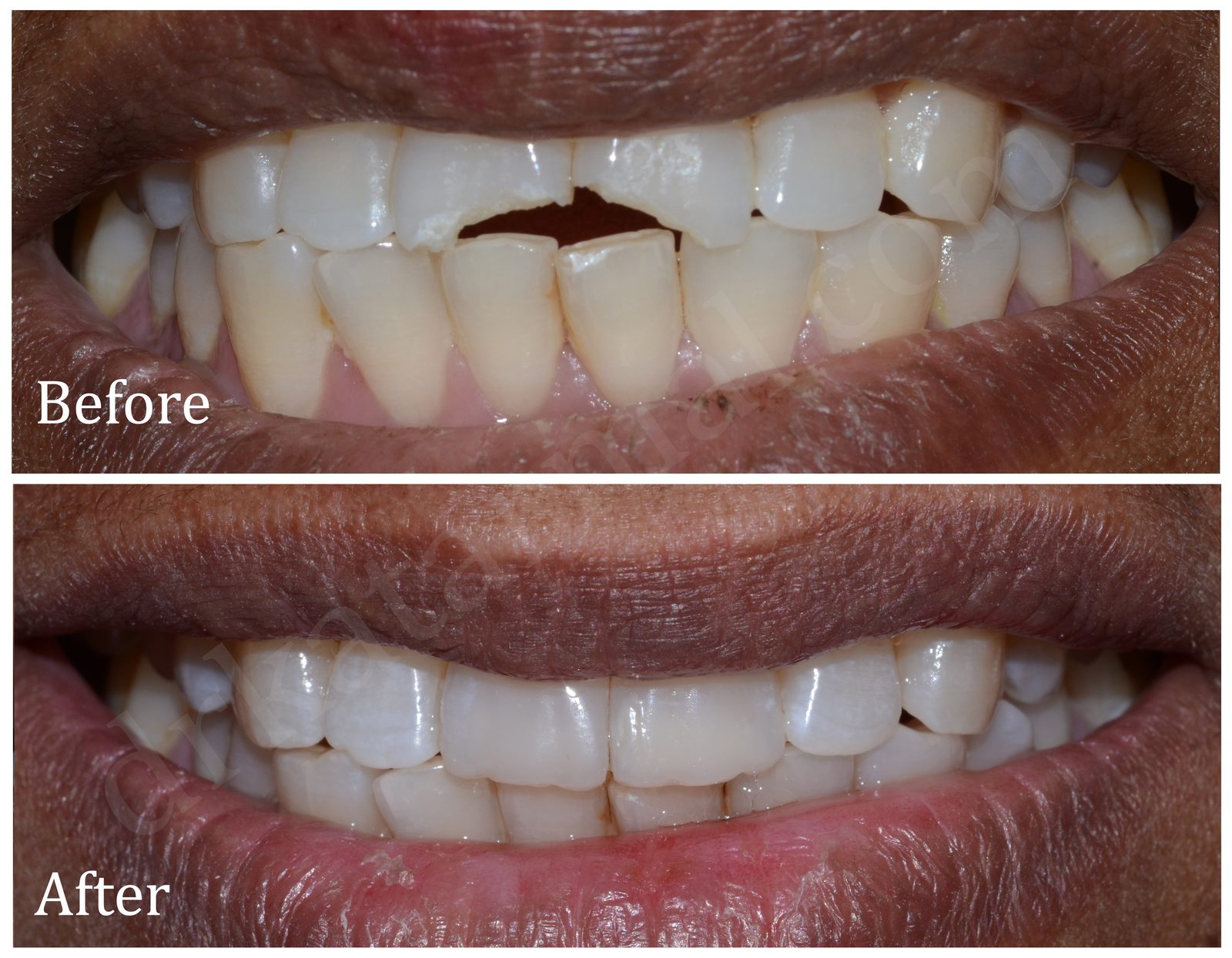
Types of Tooth Fractures
- Chipped enamel — a small piece breaks off the edge, usually painless
- Broken cusp — a corner of a back tooth breaks, often around an old filling
- Cracked tooth — a crack runs from the biting surface towards the root, causing sharp pain on biting or releasing
- Split tooth — the crack has divided the tooth into separate parts
- Vertical root fracture — a crack that starts in the root, often found in root-canal-treated teeth
Treatment Options
- Composite bonding for small chips on front teeth — done in one visit
- Ceramic onlays for broken cusps on back teeth
- Zirconia or E-max crowns to hold a cracked tooth together
- Root canal treatment followed by a crown when the crack has reached the nerve
- Extraction and replacement with an implant or bridge when a tooth is split beyond repair
What to Do If You Break a Tooth
- Rinse your mouth gently with warm water.
- If there is bleeding, press a clean gauze or cloth on the area for ten minutes.
- Save any broken piece in a small container of milk and bring it with you.
- Use a cold compress on the cheek to reduce swelling.
- Avoid chewing on that side and call Duhita Dental on 0866 247 4066 for an early appointment.
How to Protect Your Teeth from Breaking
- Avoid biting hard objects — ice, bones, betel nut, pen caps, opening bottles
- Wear a mouthguard for contact sports
- Ask about a night guard if you grind or clench your teeth
- Get large old fillings and root-canal-treated teeth crowned when advised
Broken & Cracked Tooth Repair at Duhita Dental
Patients from Benz Circle, Krishna Nagar, Gayatri Nagar, Patamata, Labbipet, Moghalrajpuram and across Vijayawada — and from nearby towns such as Guntur, Mangalagiri, Amaravati, Tadepalli, Tenali — choose Duhita Dental for experienced, specialist-led care, strict sterilisation and transparent pricing. Book a consultation or call 0866 247 4066 to discuss your treatment.
Frequently Asked Questions
No. Unlike bone, enamel cannot repair itself. Early treatment is the best way to keep the tooth.
A small painless chip can wait a few days. A large break, pain, bleeding or a visible pink or red spot (the nerve) needs to be seen the same day.
Sharp pain on biting, or when you release the bite, is a typical sign of a cracked tooth. The crack flexes under pressure. A crown often stops the pain by holding the tooth together.
Yes. Composite bonding and ceramic crowns are matched to the shade of your own teeth, so the repair blends in.